
Testing and Simulation Review put engineering intellectual property theft where it belongs: inside the daily movement of files between teams, suppliers and specialist partners. Sensitive information is not always lost through a dramatic intrusion. A rushed attachment, an open link, a stale permission or an untracked download can be enough.
Aerospace, automotive and advanced manufacturing programmes depend on constant external exchange. CAD assemblies, simulation outputs, calibration files, test reports and commercial documents leave controlled internal systems every day. The transfer may be routine. The information is not.
ValueTechnical data may retain strategic and commercial importance for years. MovementFiles cross OEMs, suppliers, laboratories, contractors and advisers. UrgencyProgramme deadlines encourage shortcuts when the approved route feels awkward. EvidenceInvestigations depend on knowing who received, accessed and downloaded the package.Engineering IP is often exposed by a weak handoff long before anyone calls the event a breach.
The useful lesson from the interview Where risk growsOrdinary exchange habitsThe file leaves one governed system and enters a less visible chain
A design pack may begin inside a product lifecycle management system with structured permissions and clear ownership. Once it is exported for supplier review, the surrounding controls can change quickly. The package may be downloaded to a local device, forwarded to a subcontractor, renamed, copied into another cloud service or retained after the project stage has ended.
01Prepare
The internal team creates the approved technical release.
02Send
The package leaves the engineering environment for external review.
03Distribute
The recipient may involve further specialists or supplier tiers.
04Revise
Comments and replacement files create more copies and new access decisions.
The most exposed material is rarely limited to drawings. It can include finite element analysis results, wind-tunnel data, ECU maps, tooling settings, PPAP evidence, supplier concessions, pricing models and programme schedules. One exchange may contain both technical IP and commercially sensitive context.
The operating problemSecurity that teams route aroundRigid controls can move risk into unapproved tools
The interview’s strongest operational point is that security must remain usable. If the approved platform struggles with large files, slow recipient setup or complicated approvals, teams may turn to email, public links or personal cloud accounts. The organisation has not removed the risk. It has pushed the exchange outside its visibility.
The team improvises
- Recipients are chosen differently for each transfer.
- Approvals and technical comments sit in separate inboxes.
- Older versions remain available without a clear owner.
- Download evidence is incomplete or spread across tools.
The handoff follows one lane
- Named recipients define who may access the package.
- Expiry and permissions are applied before release.
- Comments and activity remain connected to the transaction.
- Administrators can review access and download history.
Anonymise, Shard and Restore changes how the file is retained
My MX Data is a secure B2B file-exchange platform for controlled transfers between organisations. After this first reference, MX provides the shorthand. Relevant Enterprise configurations can use ASR, which stands for Anonymise, Shard and Restore.
ASR transforms the data, separates it into protected shards and restores the file for an authorised recipient. A complete readable file is not retained in one place through that process. The method is separate from encryption and works alongside AES-256, multi-factor authentication, named access and audit records.
The visual below shows why one exposed shard is different from a captured complete file.
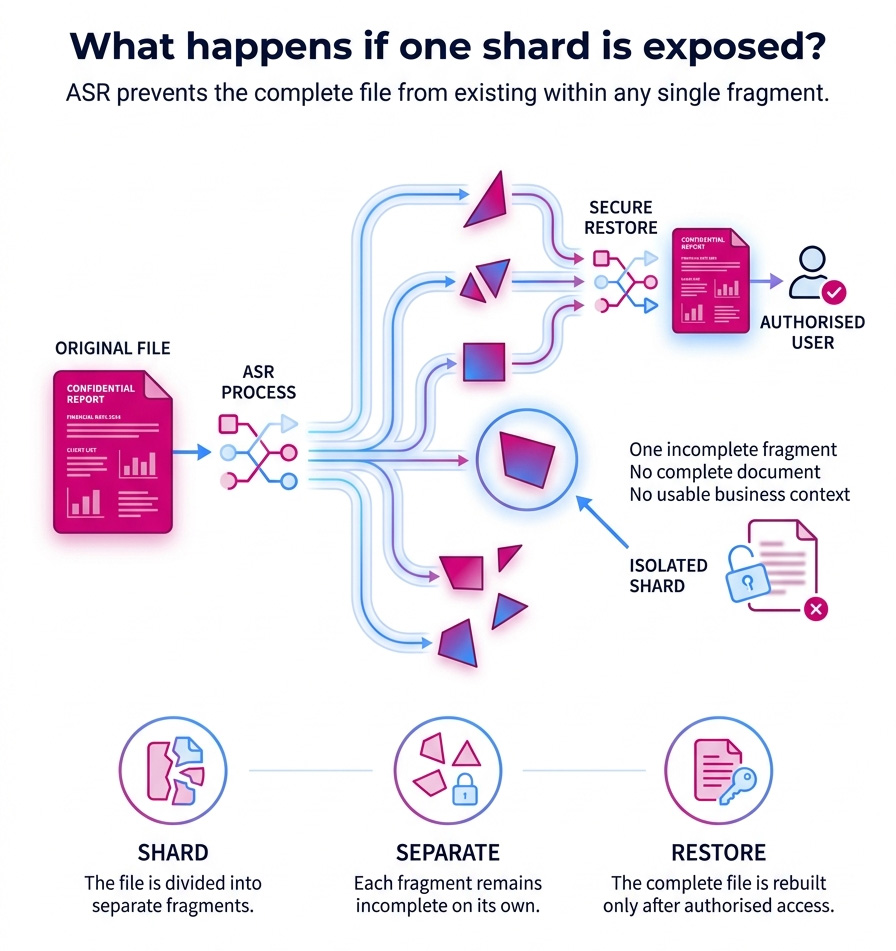
An isolated shard lacks the complete document
The information is restored only through the authorised process. ASR adds resilience to the exchange pathway without replacing contracts, endpoint security or supplier governance.
Keep the security model layeredEncryption protects data against unauthorised reading. Named access controls who should receive it. Expiry limits availability. Audit records provide evidence. ASR changes how the information is separated and restored.
Programme actionFive controls to apply nowReduce exposure without redesigning the whole engineering environment
01Classify the release
Identify which files contain long-life IP, personal data or commercially sensitive material.
02Name the recipients
Give each external participant only the information needed for the current task.
03Set the end date
Use expiry by default and extend access only when the programme requires it.
04Keep context attached
Record delivery notes, questions and approvals beside the relevant transaction.
05Review the evidence
Check downloads, unusual activity and stale access at each project or supplier milestone.
MX can support this process with named recipients, configurable conditions, MX Conversations, Linked Transactions and transactions without a fixed platform file-size limit. It is designed to complement engineering repositories and live collaboration systems, not replace them.
The key point from Testing and Simulation ReviewEngineering IP protection succeeds when secure behaviour is practical enough to become the normal route. One accountable exchange process is easier to govern than a collection of quick fixes chosen under deadline pressure.
SourcesSupporting guidance